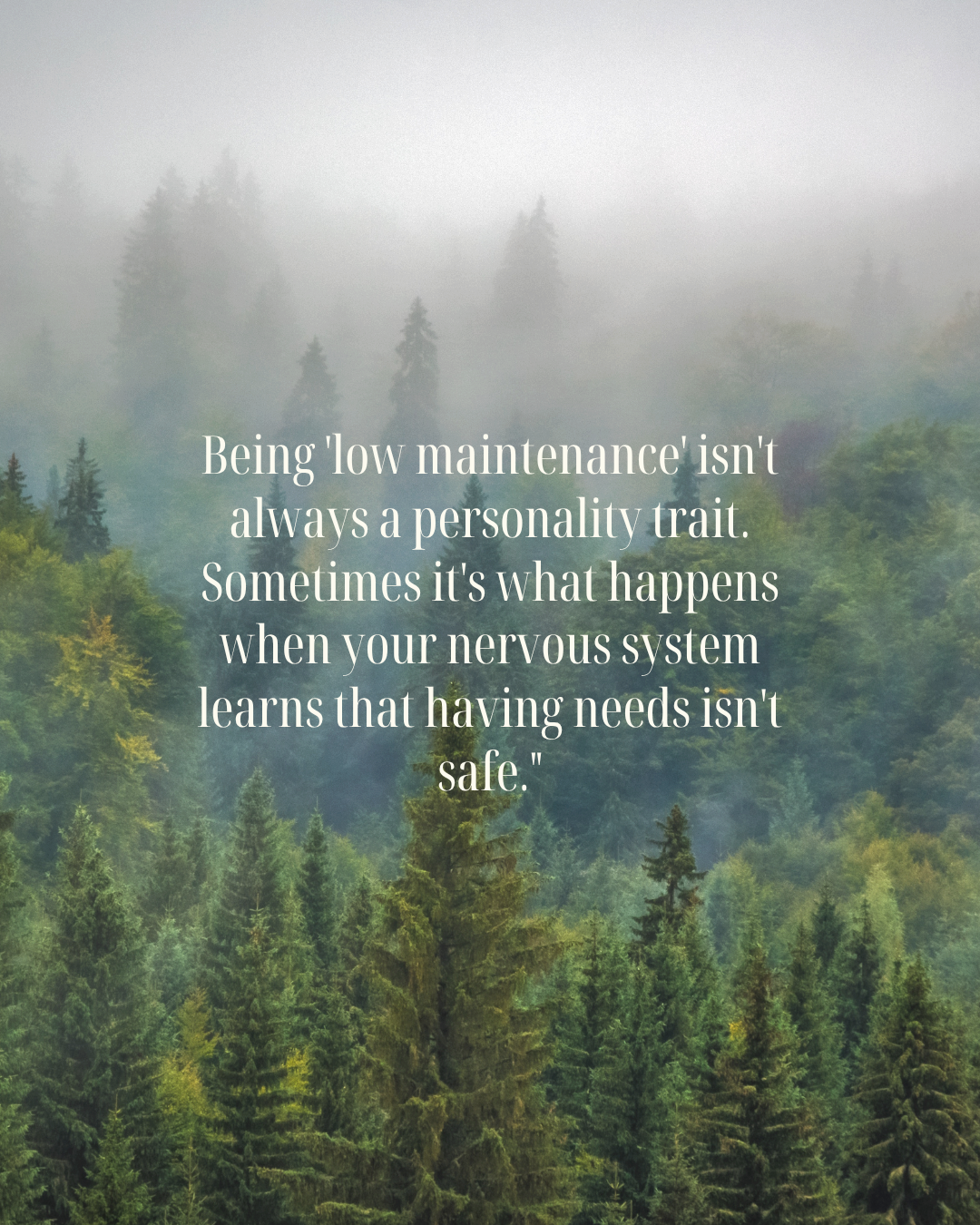
Perfectionism is often praised in modern culture. In workplaces, academic settings, and even personal relationships, it can look like ambition, discipline, responsibility, and high standards. Many people describe perfectionism almost proudly, as though it is evidence of commitment or competence.
However, for many people, perfectionism is not simply about wanting to do well. It is about fear. Fear of criticism, rejection, failure, disappointing others, or being exposed as inadequate. What appears externally as achievement can internally feel like chronic anxiety, pressure, and exhaustion.
Perfectionism, especially when rooted in trauma, is less about excellence and more about survival.
What Is Trauma-Driven Perfectionism?
Healthy striving and perfectionism are not the same thing.
Healthy Striving
Healthy striving allows room for:
- Mistakes
- Flexibility
- Learning
- Rest
- Self-worth independent of achievement
Perfectionism
Perfectionism tends to involve:
- Rigid standards
- Harsh self-criticism
- Fear of mistakes
- Chronic self-monitoring
- The belief that imperfections are unacceptable
At its core, trauma-driven perfectionism is often built around an unconscious belief:
“If I can just do everything perfectly, maybe I’ll finally be safe, accepted, or enough.”
The Cycle of Perfectionism
Many people find themselves trapped in a familiar pattern:
- Setting impossibly high standards
- Feeling intense anxiety about mistakes
- Achieving goals
- Feeling temporary relief
- Immediately moving to the next benchmark
- Criticizing themselves when imperfections appear
No accomplishment ever feels fully satisfying because perfectionism is not actually seeking success.
It is seeking safety.
Where Does Perfectionism Come From?
Childhood Experiences and Survival Strategies
Perfectionism frequently develops in environments where love, approval, safety, or emotional stability felt conditional.
Children naturally look to caregivers for:
- Validation
- Security
- Emotional attunement
- Acceptance
When those needs are inconsistently met, children adapt in ways that help maintain connection and reduce emotional pain.
This can occur in homes characterized by:
- High criticism
- Unrealistic expectations
- Emotional neglect
- Chaotic family dynamics
- Parentification
- Emotional caretaking roles
- Chronic invalidation
- Praise tied primarily to achievement
In these environments, children often learn that being successful, agreeable, or high-performing increases safety and reduces conflict.
Over time, the nervous system begins associating:
- Achievement with protection
- Mistakes with danger
Perfectionism becomes an adaptive survival strategy.
When Self-Worth Depends on Achievement
Understanding Conditional Worth
One of the strongest roots of perfectionism is conditional positive regard—receiving attention, approval, or affection primarily when meeting expectations.
Children may internalize beliefs such as:
- “I am lovable only when I succeed.”
- “Mistakes make me unworthy.”
- “I have to earn rest.”
- “I have to earn validation.”
- “If I disappoint people, I may lose connection.”
These beliefs often persist into adulthood outside conscious awareness.
Even highly accomplished people may continue feeling inadequate because their self-worth was never allowed to exist independently of performance.
The Perfectionism Paradox
The more successful someone becomes externally, the more terrified they may feel internally about failure.
This helps explain why achievement often fails to create lasting confidence or peace.
The Nervous System and the Fear of Mistakes
Perfectionism is not simply a mindset.
It is also a nervous system adaptation.
When children grow up in emotionally unsafe environments, the brain learns to constantly scan for:
- Mistakes
- Criticism
- Rejection
- Disapproval
- Threat
Even as adults, relatively small errors can trigger intense emotional reactions because the body interprets imperfection as danger.
Signs of Nervous System-Based Perfectionism
- Overthinking
- Constant self-monitoring
- Fear of feedback
- Difficulty relaxing
- Trouble tolerating uncertainty
- Anxiety about making mistakes
- Feeling guilty while resting
- Chronic tension and stress
For many perfectionists, slowing down feels uncomfortable because productivity has become linked to protection.
The Role of the Inner Critic
Many perfectionistic individuals live with a relentless inner critic.
It may sound like:
- “You should be doing more.”
- “You’re falling behind.”
- “You can’t afford to fail.”
- “You’re not good enough yet.”
- “People will be disappointed in you.”
From a trauma-informed perspective, the inner critic is often a protective adaptation rather than an accurate reflection of reality.
Its purpose is to anticipate criticism before it comes from others.
The mind learns:
“If I criticize myself first, maybe I can prevent rejection.”
While this strategy may have once helped create safety, it often becomes a major source of anxiety, shame, and emotional exhaustion.
The Hidden Cost of High Achievement
Perfectionism can fuel extraordinary success.
Many perfectionistic individuals are:
- Conscientious
- Driven
- Responsible
- Highly capable
Yet external achievement often coexists with profound internal distress.
Common Emotional Consequences
- Chronic anxiety
- Burnout
- Imposter syndrome
- Emotional numbness
- Fear of vulnerability
- Difficulty enjoying success
- Inability to rest
- Feeling disconnected from yourself
Because perfectionism is driven by fear, accomplishments rarely create lasting relief.
The issue is not competence.
The issue is a nervous system that never learned it was safe to exist without constantly performing.
Why “Just Relax” Doesn’t Work
Many common suggestions miss the underlying trauma response.
Advice like:
- “Lower your standards.”
- “Stop overthinking.”
- “Just let it go.”
- “Practice more self-care.”
can feel frustrating or ineffective.
If your nervous system genuinely believes mistakes equal rejection or danger, those responses cannot simply be turned off through logic.
This is why many people understand their perfectionism intellectually but still feel trapped by it emotionally.
Insight matters.
But healing requires helping the nervous system experience safety differently.
How Therapy Helps Heal Perfectionism
Healing perfectionism is not about becoming careless or unmotivated.
It is about separating self-worth from performance.
This often involves learning that:
- Rest is not laziness
- Mistakes do not define worth
- Vulnerability is not weakness
- Achievement is not the same as safety
- Being human does not require perfection
Effective Therapy Approaches
Trauma-informed therapy may include:
Internal Family Systems (IFS)
Explores the protective parts beneath perfectionism and self-criticism.
Somatic Therapy
Addresses the nervous system patterns that keep perfectionism active.
Acceptance and Commitment Therapy (ACT)
Helps individuals move toward values-driven living instead of fear-driven achievement.
Mindfulness-Based Therapy
Builds awareness and flexibility around perfectionistic thoughts and behaviors.
Rather than attacking perfectionistic tendencies, these approaches often focus on understanding what those patterns are trying to protect.
Beneath perfectionism there is often:
- Fear
- Shame
- Grief
- Vulnerability
- Younger parts of the self who learned that love had to be earned
Healing begins when those parts experience something different:
Acceptance without performance.
Moving From Perfectionism to Wholeness
Recovery from perfectionism is not about lowering standards.
It is about loosening the belief that your worth depends on flawless performance.
Over time, healing often creates the ability to:
- Make mistakes without spiraling into shame
- Rest without guilt
- Experience relationships without performing
- Feel satisfaction without constantly moving the goalpost
- Hold both ambition and humanity at the same time
The goal is not to eliminate excellence.
The goal is to stop living as though survival depends on being perfect.
Final Thoughts: You Do Not Have to Earn Your Worth
For many people, perfectionism began as a brilliant survival strategy.
It helped create safety, predictability, approval, or connection in environments where those things felt uncertain.
But what once protected you may now be exhausting you.
Healing does not mean giving up ambition.
It means recognizing that your worth exists independent of your productivity, performance, or achievements.
Because beneath perfectionism is often someone who learned very early that love, safety, and belonging had to be earned.
And healing begins when the nervous system slowly learns that they do not.