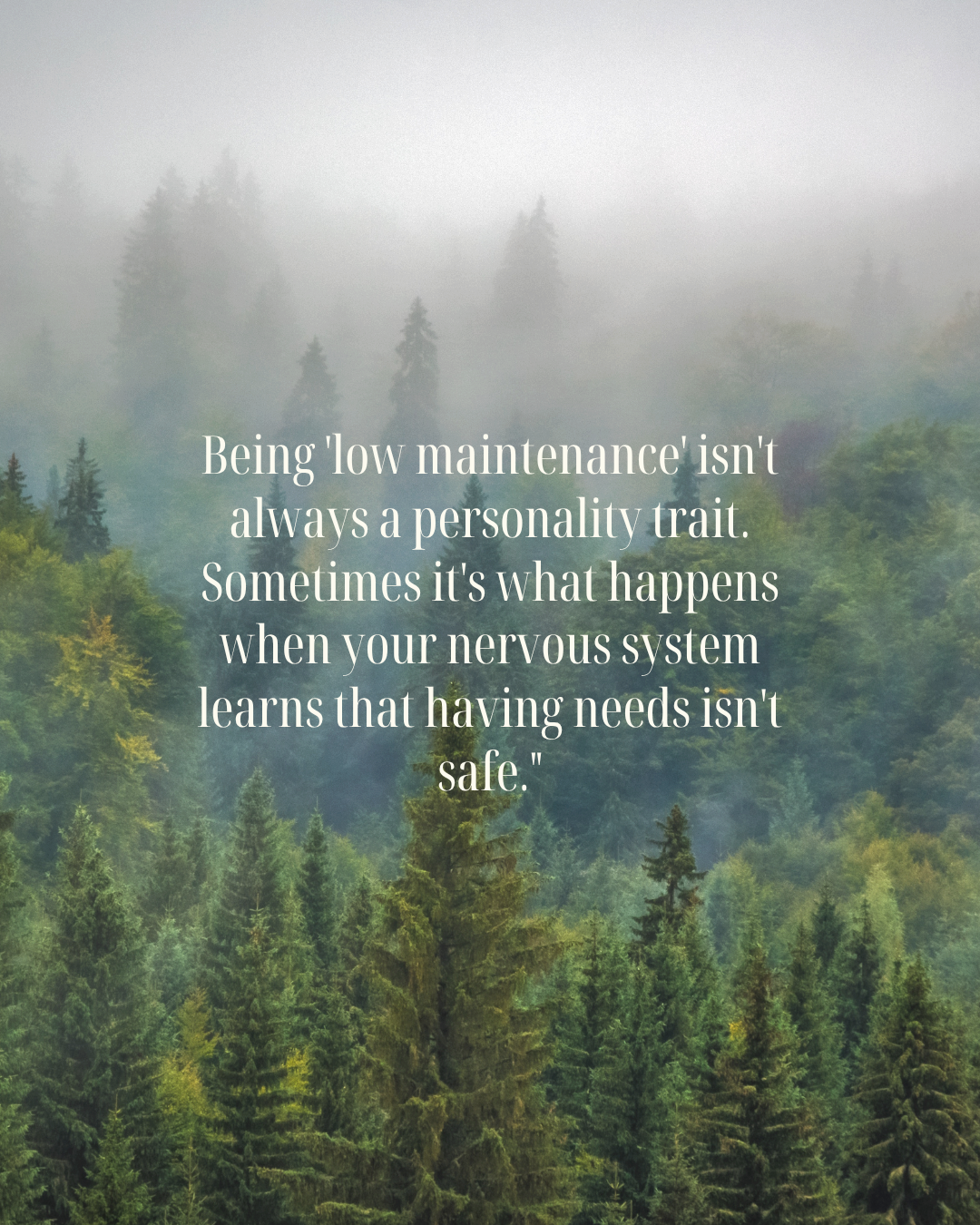
There is a particular kind of mental and emotional load that often goes unnamed. It shows up as a constant awareness of other people’s moods, a reflex to adjust oneself before speaking, and a subtle but persistent sense of responsibility for maintaining emotional stability in relationships. It may feel automatic, less like a decision and more like a background process that continuously scans, predicts, and responds.
Over time, this way of relating can become exhausting, even when it is outwardly associated with competence, empathy, and reliability. This pattern is commonly referred to as emotional caretaking, and at its core is a related construct: hyper-responsibility.
What Is Emotional Caretaking?
Emotional caretaking is not simply empathy or kindness. It is a compulsive sense of responsibility for other people’s emotional states.
This often includes:
- Feeling accountable for how others feel
- Attempting to prevent discomfort, conflict, or disappointment
- Monitoring emotional environments closely
- Adjusting behavior to maintain relational equilibrium
The key distinction lies in compulsion and perceived responsibility.
Healthy care is flexible and chosen.
Emotional caretaking feels urgent, necessary, and difficult to opt out of, even when it comes at a personal cost.
Hyper-Responsibility: The Hidden Pattern Beneath Emotional Overfunctioning
Hyper-responsibility refers to an inflated sense of responsibility for things that are not fully within one’s control, particularly other people’s emotions, reactions, or outcomes.
Common Signs of Hyper-Responsibility
- Over-apologizing
- Taking ownership of others’ distress
- Difficulty allowing others to experience consequences
- Over-functioning in relationships
- Constantly fixing or rescuing
- Persistent guilt when not helping
While this pattern is often socially rewarded, it frequently leads to:
- Anxiety
- Emotional exhaustion
- Burnout
- Resentment
- Difficulty identifying personal needs
Over time, emotional caretaking can create a cycle where caring for others becomes so automatic that caring for yourself feels unfamiliar.
How Emotional Caretaking Develops
Early Relationships and Survival Strategies
Emotional caretaking is best understood as an adaptation rather than a personality flaw.
It often develops in childhood environments characterized by:
- Emotional unpredictability
- Caregiver dysregulation
- Emotional neglect
- Parentification
- Pressure to maintain harmony
- Caregivers who relied on children for emotional support
In these environments, paying close attention to other people’s emotions becomes a form of protection.
The nervous system learns to:
- Detect subtle emotional shifts
- Anticipate reactions
- Prevent conflict
- Reduce tension
- Stay emotionally vigilant
What once served as a survival strategy can later become an automatic relational pattern that follows someone into adulthood.
The Nervous System and Emotional Overfunctioning
Why You Feel Responsible for Everyone Else
Emotional caretaking is not just a mindset. It is also a nervous system response.
Chronic emotional monitoring is associated with:
- Heightened threat detection
- Increased sensitivity to interpersonal cues
- Rapid activation of stress responses
- Difficulty tolerating conflict or disappointment
As a result, relatively minor situations may trigger intense internal reactions:
- A delayed text response
- A change in someone’s tone
- Perceived disapproval
- Conflict or tension
The body may respond with:
- Anxiety
- Urgency to fix things
- Tightness in the chest
- Shallow breathing
- Restlessness
- Hypervigilance
Understanding emotional caretaking as a nervous system adaptation rather than a conscious choice is often a crucial step toward healing.
When Emotional Intelligence Becomes Emotional Exhaustion
Many people who struggle with emotional caretaking are highly skilled in relationships.
They are often:
- Empathetic
- Emotionally intelligent
- Thoughtful
- Reliable
- Attuned to others’ needs
- Excellent problem-solvers
These qualities are strengths.
The challenge emerges when they are driven by hyper-responsibility rather than choice.
The Cost of Emotional Overfunctioning
Over time, emotional caretaking can lead to:
- Chronic emotional fatigue
- Blurred boundaries
- Difficulty identifying personal wants and needs
- Relationship resentment
- Burnout
- A constant feeling of carrying too much
This often creates a paradox:
High external functioning paired with internal depletion.
Compassion vs. Hyper-Responsibility
One of the most important distinctions in therapy is understanding the difference between compassion and emotional over-responsibility.
Compassion
Compassion involves:
- Awareness of another person’s experience
- Care and concern
- Empathy
- Emotional grounding
- Respect for autonomy
Hyper-Responsibility
Hyper-responsibility involves:
- Taking ownership of another person’s feelings
- Feeling responsible for fixing distress
- Difficulty tolerating discomfort
- Losing yourself in someone else’s experience
Compassion allows for connection without losing yourself.
Hyper-responsibility often erases that boundary.
Cultural and Gender Influences on Emotional Caretaking
Emotional caretaking rarely develops in isolation.
Many social and cultural systems reinforce it.
Examples include:
- Expectations that women prioritize others’ needs
- Family systems that reward self-sacrifice
- Cultural values emphasizing harmony over self-expression
- Messages that worth comes from being useful or dependable
Because emotional overfunctioning is often praised, many people fail to recognize the emotional toll it takes until they experience burnout or relationship strain.
How to Stop Feeling Responsible for Everyone Else’s Emotions
Healing emotional caretaking requires both awareness and nervous system change.
1. Differentiate Responsibility
Ask yourself:
“Is this mine to manage?”
This simple question can interrupt automatic patterns of over-responsibility.
2. Pause Before Responding
When someone is distressed, create a brief pause before moving into problem-solving mode.
This allows you to choose your response rather than react automatically.
3. Allow Emotional Autonomy
Remember:
Other people can:
- Feel disappointed
- Regulate themselves
- Make mistakes
- Learn from consequences
Supporting someone does not require controlling their experience.
4. Reduce Reflexive Apologizing
Notice when you’re apologizing for things that are not your responsibility.
Replacing unnecessary apologies with acknowledgment or neutrality helps restore appropriate boundaries.
5. Rebuild Self-Attunement
Practice regularly asking:
- What am I feeling?
- What do I need right now?
- What would support me?
This helps shift attention inward rather than exclusively outward.
6. Work With the Nervous System
Because emotional caretaking is often embodied, approaches such as:
- Somatic therapy
- Mindfulness
- Breathwork
- Attachment-focused therapy
- Parts work (IFS)
can be particularly effective.
7. Grieve the Identity Shift
Many people discover that emotional caretaking has become part of their identity.
Letting go of hyper-responsibility may involve grieving:
- Old roles
- Familiar dynamics
- Relationships built on overfunctioning
- The belief that your value comes from fixing or carrying
This grief is often a necessary part of healing.
What Healing Looks Like
As emotional caretaking becomes less automatic, people often report:
- Reduced anxiety in relationships
- Clearer boundaries
- More balanced partnerships
- Greater awareness of personal needs
- Increased emotional energy
- Less guilt about prioritizing themselves
The goal is not to become less caring.
The goal is to restore choice.
You can remain compassionate without carrying responsibility for everyone else’s emotional experience.
Final Thoughts: Caring Without Carrying
Emotional caretaking is often rooted in empathy, resilience, and a genuine desire to support others. But when caring becomes fused with responsibility, it can leave little room for your own needs, emotions, and well-being.
Healing is not about becoming less kind.
It is about recognizing where your responsibility ends and someone else’s begins.
Compassion remains.
Connection remains.
Care remains.
Carrying everything does not.