Most people expect major life changes to feel difficult when they involve loss, disappointment, or hardship. What often comes as a surprise is how emotionally destabilizing positive life transitions can be.
A long-awaited promotion. A move to a dream city. Marriage. Parenthood. Graduation. Starting a new business. Retirement. Even beginning therapy.
These milestones are often associated with excitement and possibility, yet many people find themselves unexpectedly anxious, overwhelmed, irritable, or emotionally unsteady during these periods. They may wonder, “Why am I struggling when this is something I wanted?”
The answer often lies in understanding the difference between change and transition.
While change happens around us, transition happens within us. And it is often the internal transition, not the external event, that creates emotional turbulence.
Change Is External. Transition Is Internal.
Change refers to an event, circumstance, or shift in our external world. Change can happen suddenly or gradually. It can be planned or unexpected. It can be positive, negative, or a mixture of both.
Transition, however, is the psychological process of adapting to that change. It involves letting go of what was familiar, tolerating uncertainty, and eventually integrating a new reality into our sense of self.
This distinction is important because while change can happen overnight, transition rarely does.
A person can move across the country in a day. Becoming emotionally settled may take months.
A promotion can happen immediately. Feeling like a leader may take much longer.
A wedding lasts a day. Becoming a spouse is a transition.
Why the Brain Struggles With Life Transitions
Human beings are wired to seek predictability. From a nervous system perspective, familiarity often feels safer than uncertainty. Even when a situation is imperfect, our brains know what to expect. Familiarity allows us to conserve energy, predict outcomes, and maintain a sense of control.
Major life transitions disrupt these patterns. The routines, roles, relationships, and assumptions that once guided daily life suddenly shift. The brain loses its map. Without that map, uncertainty increases, and uncertainty is one of the primary fuels of anxiety.
This is why even positive life changes can trigger symptoms such as:
- Excessive worrying
- Restlessness
- Difficulty sleeping
- Increased self-doubt
- Irritability
- Difficulty concentrating
- Feeling emotionally overwhelmed
These reactions are not signs that something is wrong. They are often signs that the nervous system is adapting to unfamiliar territory.
The Hidden Grief of Positive Change
One of the most overlooked aspects of life transitions is that they often involve loss. Even when we gain something meaningful, we are simultaneously leaving something behind.
A new parent gains a child but loses certain freedoms and routines.
A promotion may bring greater influence but also means leaving behind a familiar professional identity.
Moving to a new city may create exciting opportunities while requiring the loss of community, familiarity, and comfort.
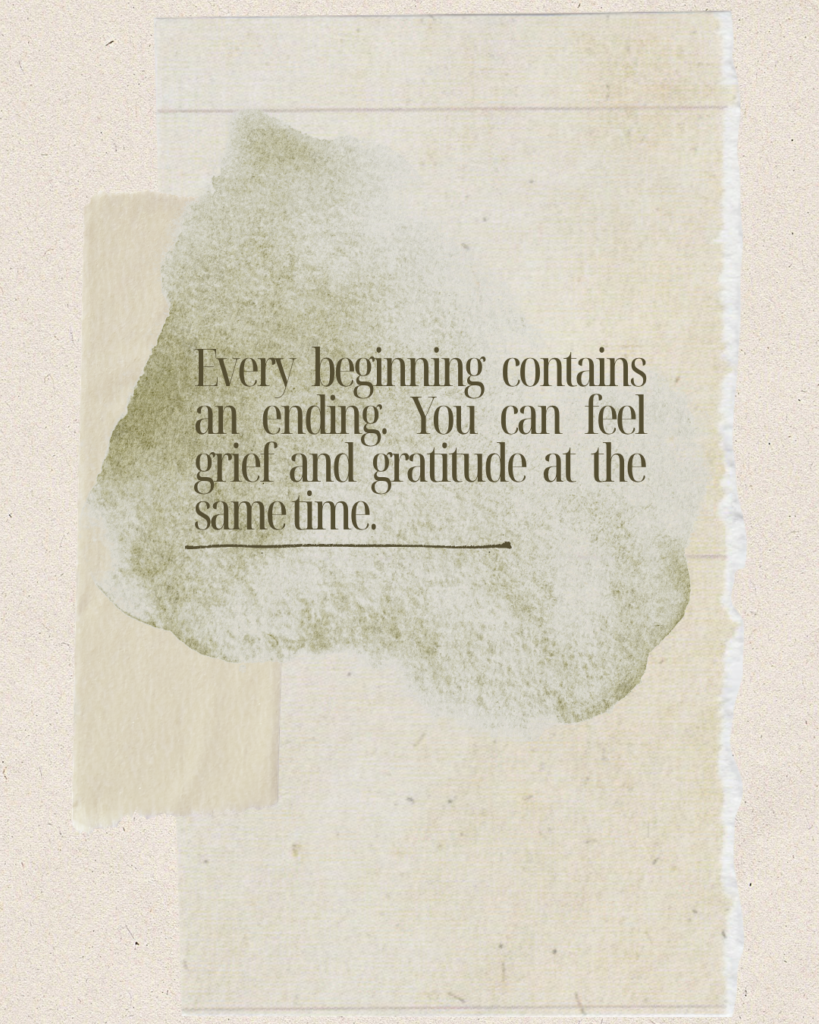
Every beginning contains an ending. Yet because these transitions are socially viewed as positive, many people feel guilty acknowledging what they miss. The reality is that grief and gratitude can coexist. You can be excited about a new chapter while mourning the one that ended.
The Identity Shift No One Talks About
Many life transitions involve more than logistical adjustments. They require identity reconstruction. When people enter significant new life stages, they often outgrow an old version of themselves before fully stepping into the next. This creates what is often described as a liminal space: the uncomfortable in-between period where the old identity no longer fits but the new identity has not yet solidified.
Examples include:
- No longer being “single” but not yet feeling like a spouse
- No longer being a student but not yet feeling established professionally
- No longer identifying solely as an individual but not yet feeling confident as a parent
- Leaving a long-term role without knowing who you are outside of it
This in-between space can feel disorienting. People often describe feeling untethered, uncertain, or disconnected from themselves.
Questions emerge:
- Who am I now?
- Am I capable of this?
- What if I fail?
- What does this new chapter mean about me?
These questions are not signs of weakness. They are often evidence that identity is evolving.
Why High-Functioning Adults Often Struggle During Major Life Changes
Many people who seek therapy during major life transitions are highly capable, responsible, and successful. Because of this, transition-related anxiety can feel particularly confusing. Individuals who are accustomed to competence often derive confidence from external reference points:
- Established routines
- Familiar environments
- Predictable expectations
- Clear performance feedback
- Defined roles
Transitions temporarily remove these anchors. Without those familiar reference points, self-doubt often emerges. What feels like insecurity is frequently the natural result of navigating unfamiliar territory without a clear roadmap.
When Responsibility Increases Faster Than Confidence
Many major life transitions involve a mismatch between responsibility and mastery.
New responsibilities arrive immediately.
Confidence develops gradually.
This gap can be deeply uncomfortable.
The internal dialogue frequently shifts from:
“I know how to do this.”
to
“I should know how to do this.”
The pressure to already be competent can intensify anxiety and self-criticism.
In reality, confidence is rarely a prerequisite for growth.
More often, confidence develops through repeated experience, trial and error, and adaptation over time.
When Life Transitions Expose Underlying Anxiety
Major life changes do not always create anxiety. Sometimes they reveal anxiety that was already present beneath the surface. During stable periods of life, routines and familiar structures can help keep underlying fears contained. Transitions remove those stabilizers. As a result, patterns such as perfectionism, people-pleasing, overthinking, excessive control, or fear of failure often become more visible. The transition itself is not necessarily the problem. Instead, it acts like a spotlight, illuminating emotional patterns that have existed for years.
Supporting Yourself Through Life Transitions
Name What You’re Feeling
Putting emotions into words helps regulate them.
Instead of saying,
“I shouldn’t feel this way.”
Try,
“I feel anxious because so much is changing right now.”
Naming emotions reduces their intensity and increases emotional awareness.
Stop Expecting Immediate Adjustment
Many people assume they should adapt quickly. In reality, psychological adjustment takes time. Transitions often take longer than expected because emotional adaptation is a process, not a deadline.
Maintain Small Sources of Stability
During periods of uncertainty, familiar routines become especially important.
Simple anchors can help regulate the nervous system:
- Consistent sleep
- Movement and exercise
- Regular meals
- Time outdoors
- Social connection
- Mindfulness practices
Small routines create predictability when larger aspects of life feel uncertain.
Focus on Values Instead of Certainty
Certainty is often unavailable during transitions.
Values remain accessible.
Rather than asking,
“How do I know this will work out?”
Try asking,
“Who do I want to be while moving through this?”
Values provide direction even when outcomes remain unknown.
Give Yourself Permission to Be a Beginner
Every new chapter requires a period of learning.
Being inexperienced does not mean being incapable.
Growth often involves temporarily tolerating incompetence while skills and confidence develop.
The Opportunity Hidden Within Transition
Life transitions can feel destabilizing because they challenge familiar ways of thinking, behaving, and defining ourselves. Yet they also create opportunities for growth. Periods of uncertainty often reveal strengths, values, needs, and possibilities that remain hidden during more predictable seasons of life.The discomfort of transition is not necessarily evidence that something is wrong. Often, it is evidence that something is changing. And change, while uncomfortable, is one of the primary ways people evolve. Life transitions are rarely as neat and straightforward as they appear from the outside.Even positive changes can bring grief, anxiety, self-doubt, and emotional upheaval. This does not mean you are failing to cope. It means you are adapting.
The challenge is not simply learning how to manage external change. It is learning how to navigate the internal transition that follows. Because growth is rarely about becoming someone entirely new. More often, it is about gradually discovering how to carry forward what matters while making space for who you are becoming.