We live in a culture that celebrates independence. Being self-sufficient, emotionally strong, and able to “handle it on your own” is often seen as a sign of maturity and resilience. And to some extent, it is. Maintaining a sense of self within relationships is not just healthy, it’s essential.
But there is a quieter, less visible edge to independence—one that doesn’t always get named. What happens when independence stops being a strength and starts becoming a shield? What happens when the need for space slowly turns into emotional distance and then into isolation?
The Subtle Shift: From Independence to Emotional Isolation
Independence, in its healthiest form, allows you to show up fully in your relationships. It gives you room to think, recharge, and remain connected to who you are outside of others.
But the shift into isolation rarely happens all at once. It’s gradual, almost invisible.
You might start:
- Needing more time alone
- Cancelling plans more often
- Sharing less about your inner world
- Withdrawing from emotional conversations
Your partner, your friends, the people who care about you begin to feel the gap, even if they can’t fully name it.
They reach out—and instead of feeling supported, you feel crowded.
So you pull back further.
This is where independence quietly turns into emotional isolation.
Emotional Self-Reliance: Strength or Survival Strategy?
Emotional self-reliance is often praised. The ability to regulate your emotions, solve problems independently, and not rely heavily on others can be incredibly adaptive.
But when self-reliance becomes the only strategy, it can limit your capacity for connection.
For many people, this pattern began early in life.
If you grew up in an environment where:
- Vulnerability was dismissed or criticized
- Emotional needs were unmet or ignored
- Asking for help led to disappointment
You may have learned that relying on yourself was the safest option.
👉 This often overlaps with patterns of hyper-independence and difficulty asking for support
When “Space” Is Actually Emotional Avoidance
Not all distance is intentional. Often, it’s protective.
Emotional avoidance frequently sits underneath hyper-independence. By staying self-sufficient, you avoid experiences like:
- Vulnerability
- Rejection
- Disappointment
- Loss of control
It may not feel like avoidance. Instead, it sounds like:
- “I just prefer doing things on my own.”
- “It’s easier if I handle it myself.”
- “I don’t want to burden anyone.”
Over time, this can lead to:
- Emotional distance in relationships
- Frustration or resentment from partners
- Superficial connections lacking depth
- Loneliness, even when surrounded by people
- Burnout from carrying everything alone
There’s a particular kind of exhaustion that comes from never putting anything down—and a particular kind of loneliness that comes from never being fully known.
Why Trust Feels So Difficult
Trust requires allowing someone else to hold part of your experience.
For someone who is deeply self-reliant, that can feel unfamiliar—or even unsafe.
Asking for help may feel like:
- Losing control
- Being exposed
- Risking disappointment
- Appearing weak
So instead, you stay in control. You manage everything internally.
But relationships require something different:
shared emotional space.
Without trust, connection often stays at the surface.
The Hidden Cost of Doing Everything Alone
Emotional self-reliance can look like strength, but it often comes with hidden costs:
- Chronic loneliness
- Emotional disconnection
- Difficulty forming deeper intimacy
- Increased stress and burnout
- Feeling unseen or misunderstood
This pattern often coexists with chronic stress, perfectionism, and high-functioning burnout
Independence without interdependence can quietly become isolation.
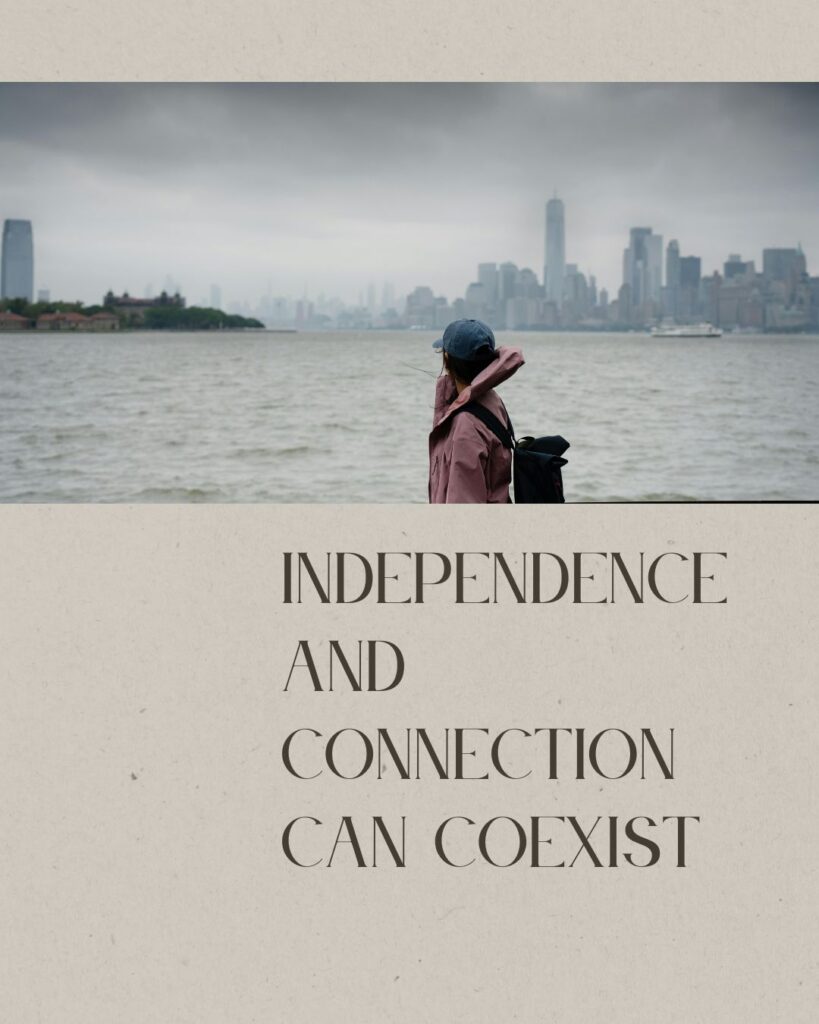
Reclaiming Balance: Independence and Connection Can Coexist
The goal is not to give up independence. It’s to expand it.
True emotional strength is not about needing no one.
It’s about being able to stand on your own—and still let others stand beside you.
1. Notice the Pattern
Pay attention to when you pull away.
Is it during conflict? Vulnerability? Emotional intensity?
Awareness is the first shift.
2. Practice Small Risks
You don’t need to open up all at once.
Start with:
- Sharing one honest feeling
- Asking for small support
- Staying present in a slightly uncomfortable moment
3. Learn Repair, Not Escape
Conflict doesn’t have to mean disconnection.
Repair—through communication, accountability, and reflection—builds stronger relationships than avoidance ever can.
4. Redefine Strength
Strength is not emotional isolation.
It is the ability to remain present—even when connection feels uncomfortable.
The Question Worth Asking
If independence has been your way of staying safe, it makes sense that letting others in feels risky.
But it’s worth asking:
What has this protected you from—and what has it cost you?
Because while independence can protect you from pain, it can also distance you from what makes relationships meaningful:
- Being seen
- Being supported
- Being known
How Therapy Can Help With Emotional Isolation
Therapy offers a space to safely explore the roots of emotional self-reliance and rebuild trust in connection.
At Holistic Psychotherapy NYC, our therapists work with clients to:
- Understand patterns of hyper-independence
- Build comfort with vulnerability
- Strengthen emotional connection in relationships
- Develop healthier ways to ask for and receive support
You don’t have to navigate this alone.