By Jahnavi Polumahanti, MHC-LP
When Avoiding Conflict Is More Than a Preference
For many people, avoiding conflict isn’t simply a preference—it’s a deeply learned survival strategy. What may appear on the surface as calmness, flexibility, or “being easygoing” is often the result of years of conditioning in environments where conflict felt unsafe, unpredictable, or emotionally costly.
In therapy, conflict avoidance shows up often: clients who shut down during disagreements, feel overwhelmed when someone is disappointed, or work tirelessly to keep others comfortable—even at their own expense. Understanding where this pattern comes from is the first step toward changing it.
Why People Learn to Avoid Conflict
Conflict avoidance is not a random personality trait. It’s shaped by early experiences, cultural messages, and relational patterns that teach the nervous system to associate disagreement with danger.
1. Growing Up in High-Conflict or Unpredictable Environments
Children who witness intense arguing, silent withdrawal, or quick “moving on” without repair often learn that conflict is destabilizing.
They internalize messages like:
-
disagreement leads to disconnection
-
anger equals threat
-
the safest choice is to stay quiet, agreeable, or invisible
This conditioning follows many into adulthood, where even mild tension can activate old survival responses.
2. Roles Learned Within the Family
In many families—especially those shaped by hierarchy, collectivist values, or intergenerational stress—certain roles become expected:
-
the peacekeeper
-
the accommodator
-
the one who absorbs tension to maintain harmony
These roles shape identity long before a person has language for what they’re carrying.
3. Cultural and Immigration-Related Expectations
For individuals from immigrant households, conflict often intersects with cultural norms:
-
protecting family harmony
-
respecting elders
-
prioritizing stability over expression
-
honoring the sacrifices of parents
Speaking up can be interpreted as disrespect, ungratefulness, or disloyalty. Many recall parents handling conflict quietly or implicitly, which teaches that conflict is something to endure, not address.
What Conflict Avoidance Looks Like in Adult Life
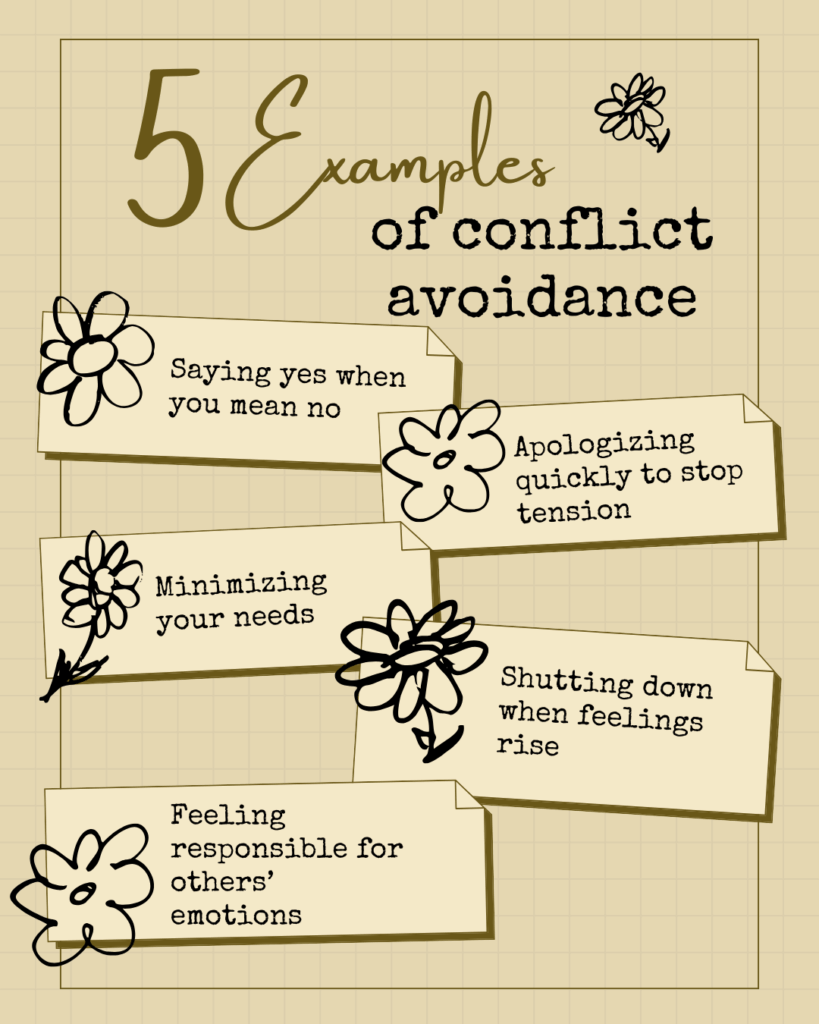
Conflict avoidance can be subtle and easy to overlook. Common patterns include:
-
difficulty expressing needs or preferences
-
minimizing problems (“It’s fine” or “not a big deal”)
-
shutting down or going blank during tension
-
feeling responsible for others’ emotions
-
apologizing quickly to soothe discomfort
-
saying yes when the real answer is no
-
guilt or anxiety after asserting oneself
These behaviors protect relationships briefly but often lead to resentment, burnout, invisibility, or unmet needs.
Why Conflict Avoidance Feels Automatic
Avoiding conflict is not a character flaw—it’s a nervous system response.
When a person has learned that conflict equals danger, the body activates survival strategies such as:
-
fawn (appease to stay safe)
-
flight (withdraw or shut down)
-
freeze (become overwhelmed, blank, or numb)
Even when someone logically knows a disagreement is safe, their body may respond as if danger is imminent.
The Hidden Costs of “Keeping the Peace”
While conflict avoidance can temporarily maintain harmony, the long-term effects can be painful:
-
unmet needs accumulate
-
communication becomes unclear
-
others misinterpret silence
-
resentment builds beneath the surface
-
self-worth becomes tied to staying agreeable
-
emotional intimacy suffers
Many clients describe feeling disconnected from themselves—unsure what they want, feel, or need.
Learning a New Way Forward
Healing conflict avoidance is not about becoming confrontational. It’s about learning to stay grounded, present, and connected during moments of tension.
1. Understanding the Origins
When clients trace their patterns back to childhood, culture, or relational experiences, avoidance begins to make sense. This insight shifts the narrative from “what’s wrong with me?” to “this is how I learned to stay safe.”
2. Rebuilding Internal Safety
Therapy helps clients:
-
regulate the nervous system
-
slow down automatic stress responses
-
tolerate discomfort
-
reconnect with authentic needs
Internal safety allows people to show up more fully in relationships.
3. Practicing Honest, Direct Communication
Clients learn to express boundaries, needs, disappointment, and differing opinions in ways that honor both themselves and the relationship. These skills feel unfamiliar at first but create clarity and connection.
4. Redefining What Conflict Means
Conflict does not have to signal rupture. With healthier patterns, it can become:
-
a pathway to deeper intimacy
-
an opportunity for repair
-
a space for honesty
-
a moment where connection strengthens rather than breaks
Conflict Doesn’t Have to Threaten the Relationship
Conflict can be uncomfortable—but so can swallowing your truth.
Many people who seek therapy for anxiety, burnout, or relationship stress eventually discover that conflict avoidance has been silently running the show. With awareness and support, it’s possible to unlearn old survival strategies and replace them with skills that allow for closeness, authenticity, and emotional freedom.
Conflict is not a sign of failure. It is a natural part of connection—one that becomes manageable and meaningful when approached with clarity, safety, and self-trust.